The Social Network (2010): It Missed Facebook's Future and Understood Its Loneliness
The Social Network (2010)
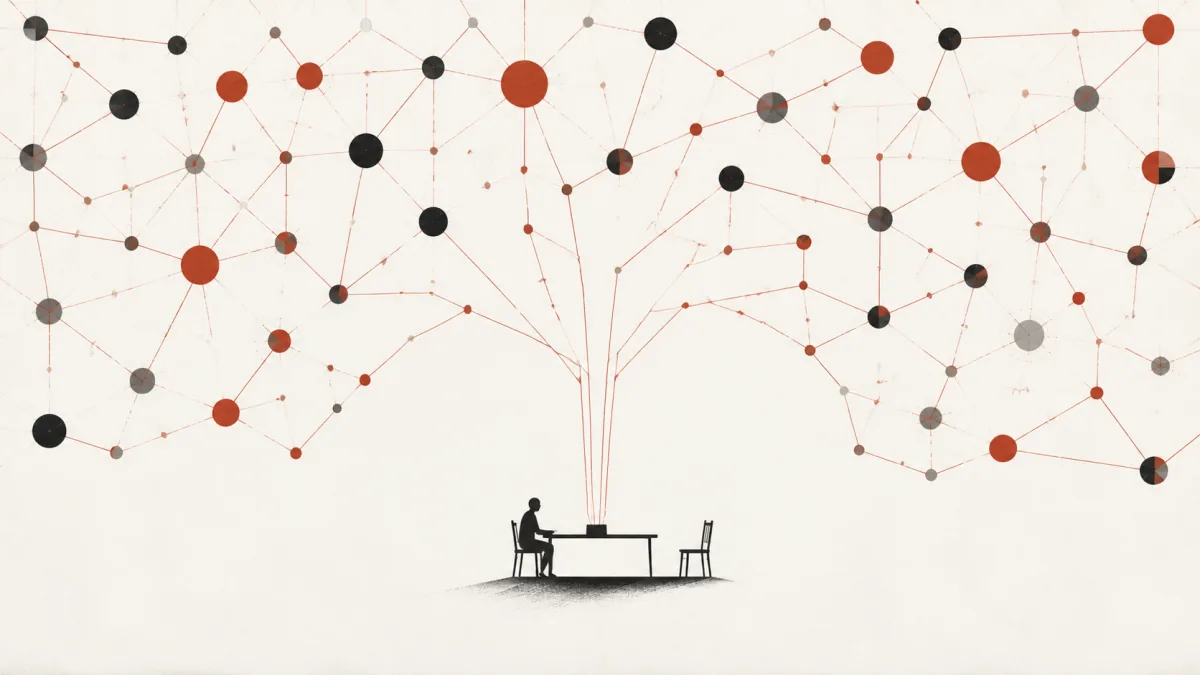
The interface has aged. The last gesture has not.
At the end of The Social Network, David Fincher does not leave Mark Zuckerberg at a podium, in a packed office, or beneath a triumphant graph. He leaves him at a screen, waiting to learn whether one person will accept a request. The character has helped build a system that lets millions announce and inspect relationships, yet he cannot make a particular relationship reopen. All he can do is refresh.
That image is sharper in 2026 than it was in 2010, although not because the film forecast Facebook’s business with any precision. The Facebook of the movie is bounded by campus directories, relationship status, elite clubs, and the thrill of expanding from one university to the next. The corporation formerly called Facebook, Inc. is now Meta Platforms, Inc.; Facebook remains one of its products. Meta’s portfolio also includes Instagram, Messenger, WhatsApp, Threads, and Meta AI, while the company develops virtual-reality products and wearables as well. The movie did not see that map coming, and it never really tried to.
What it understood was more durable: a person can industrialize visibility without learning how to see the person across the table.
This site’s judgment is that The Social Network is not a reliable technological history or a correct prophecy of Facebook’s product future. It is a modern tragedy that uses machine-speed dialogue, incompatible testimony, controlled frames, and a brutally simple ending to show a person who wants connection but experiences intimacy as a loss of control. Its major limitation is equally important: women and the wider social costs of the platform are repeatedly reduced to reflective surfaces for a story about male genius and male friendship. That combination earns it 9.0 out of 10.
The movie’s Mark is a dramatic construction, not a diagnosis
Before interpreting the character, the category has to be clear. This is a film about a fictionalized Mark Zuckerberg, not a psychological verdict on the living founder.
Aaron Sorkin has described his nonfiction writing as a painting rather than a photograph. Journalism and drama, in his account, perform different kinds of selection. He also said he had not met Zuckerberg when writing the screenplay. Those admissions do not excuse every alteration, but they tell us how to read the causal chain the movie builds from a breakup and status anxiety to a global company: as designed drama, not sworn corporate history.
The distinction improves the film. Its claim is not the silly proposition that one bad date literally created Facebook. It constructs a dramatized version of Zuckerberg who translates every humiliation into a problem of scale. Excluded from someone else’s club, he will build a larger one. Unable to secure one person’s affection, he will make an interface that everyone else needs. When a conversation escapes his control, he relocates control into code, account access, corporate paperwork, and ownership.
That pattern is the film’s real subject. What happens when abstraction is not only somebody’s talent but also his refuge? If every messy need can be converted into a field, a ranking, or a permission, the engineer never has to stay in the room where another person can say no.
Dialogue at network speed
The opening bar scene is not merely a virtuoso introduction. It is a model of the platform that follows.
Erica is trying to have a conversation in the present tense: Are you listening? What did you mean? Do you understand what this sentence does to me? Mark keeps moving the exchange into systems where he has an advantage—intelligence, final clubs, future achievement, relative status. He hears the vocabulary but rejects the unit of measurement.
Speed is what makes that evasion possible. Every emotional request can be decomposed into a logical defect before it reaches him. Every criticism can be converted into a contest with a winner. A slower scene might require Mark to register injury, silence, or shame. Sorkin’s rapid turns allow him to stay half a beat ahead of all three. Intelligence becomes impressive and defensive at the same time.
Erica’s strength is that she eventually stops competing on his terms. She does not beat him with a cleverer syllogism. She names the human conduct underneath the performance and leaves. Mark will spend the rest of the film amassing evidence that her assessment should not matter. The final shot reveals that company growth and her judgment were never answers to the same question.
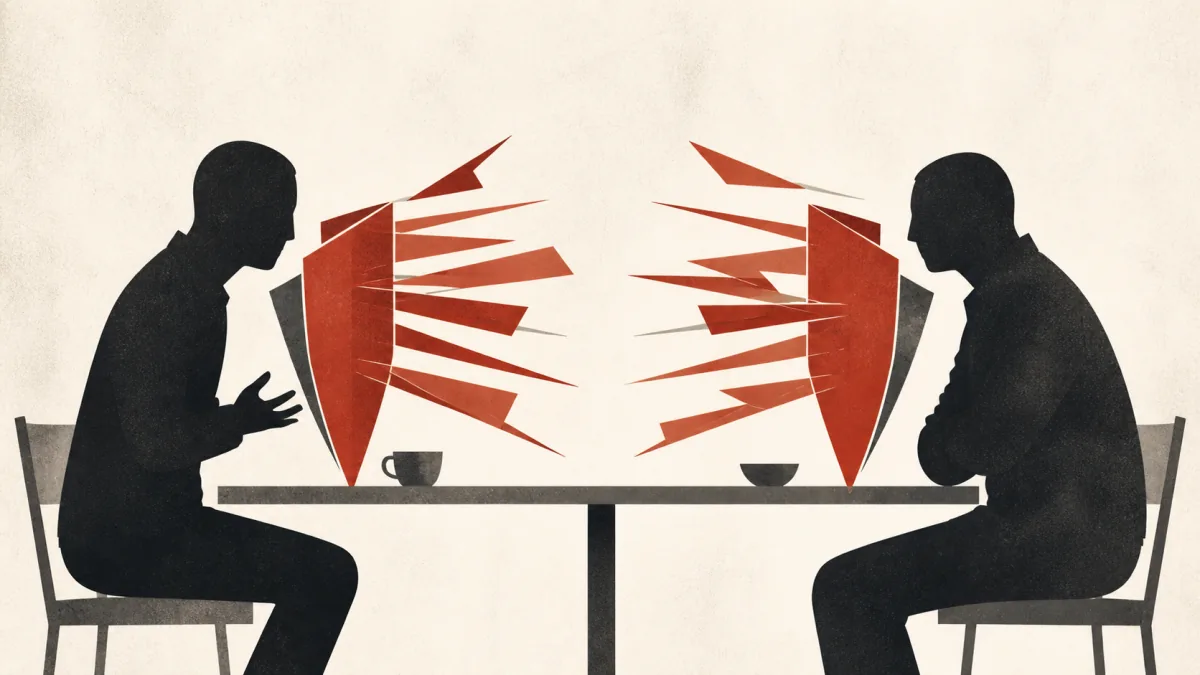
The production treated this rhythm as structure, not decoration. In a 2024 Library of Congress interview, Sorkin said performed speech follows musical rules of tone, pitch, and rhythm. He recalled a 172-page shooting script, unusually long because dialogue occupies more paper than screen time. During preparation, Fincher asked him to read it aloud at the pace in his head and timed the scenes. In rehearsal, the opening was adjusted by seconds. The finished film still runs about two hours.
Fincher then refuses to photograph the words like a filmed play. The crowded bar makes listening into work. Low light separates the pair without giving them privacy. The cutting tracks shifts in power, but the camera does not pause after each clever line to solicit applause. The language sparkles while the situation curdles. That tension is the collaboration’s achievement: Sorkin supplies verbal music, and Fincher makes us notice the silence it prevents.
A product launch built from a refusal to feel
The Facemash sequence is remembered as one of cinema’s great coding montages because it delivers the physical sensation of a system coming alive. Keys strike, pages load, images move, votes accumulate, parties continue elsewhere, and Trent Reznor and Atticus Ross’s score gives the work a dark electrical current. The scene does not stop to explain every operation. It makes velocity legible.
That velocity is morally dangerous, not morally neutral. The fictionalized Mark converts a humiliation he cannot metabolize into an interface that invites other people to humiliate women. Photographs lose context and become paired inputs. The absence of friction is the feature: no expression must be answered, no refusal endured, no relationship repaired after the click.
Fincher does not make the programming dull in order to keep the audience innocent. He makes it thrilling. That is the sharper choice. A clumsy montage would permit viewers to stand comfortably above the behavior; this one implicates our attraction to competence, acceleration, and visible results. Harm and achievement are not treated as moral opposites that cancel each other. They occupy the same rhythm.
The sequence also establishes the grammar that Facebook will refine inside the movie: compress a difficult social desire into a field; compress the field into an action; use the accumulation of actions as proof that the product matters. The problem is not that software mediates a relationship. The problem is the fantasy that mediation removes responsibility for what has been made easy.
The film’s three Academy Awards—adapted screenplay, original score, and editing—form an unusually accurate summary of how this works. Words create speed. Music turns speed into pressure. Editing makes pressure feel like destiny. The prizes do not prove the interpretation, but the cluster identifies the crafts on which the movie’s argument depends.
The depositions are the operating system
Many rise-and-fall dramas treat the courtroom or deposition as a frame: a little present-day exposition wrapped around the supposedly real story. The Social Network makes its two legal disputes the mechanism through which the past exists.
On one side, Cameron and Tyler Winklevoss and Divya Narendra argue about ideas, promises, and execution. On the other, Eduardo Saverin argues about friendship, investment, exclusion, and dilution. The film does not run smoothly from 2003 to success. It repeatedly calls the past into a room where everyone still has something to gain from how that past is described.
This is why the movie never provides a clean answer to the apparently simple question, “Who made Facebook?” An idea, code, money, introductions, timing, labor, and risk can all become the central contribution depending on who arranges the list. Mark recognizes creation most readily when it resembles programming. Other characters include the request, the opportunity, the resources, or the shared undertaking. Law needs to turn those claims into ownership. The film keeps allowing the personal obligations underneath ownership to leak back into view.
Editing is therefore doing more than fitting a long script into a fast movie. It keeps truth visibly jointed. A deposition answer cuts into a scene that seems to support the speaker; a later transition changes the emotional weight of the same history. The audience is denied enough certainty to act as a jury. We receive something less tidy and more painful: several people can possess part of the truth, and partial truths remain sufficient to destroy a relationship.
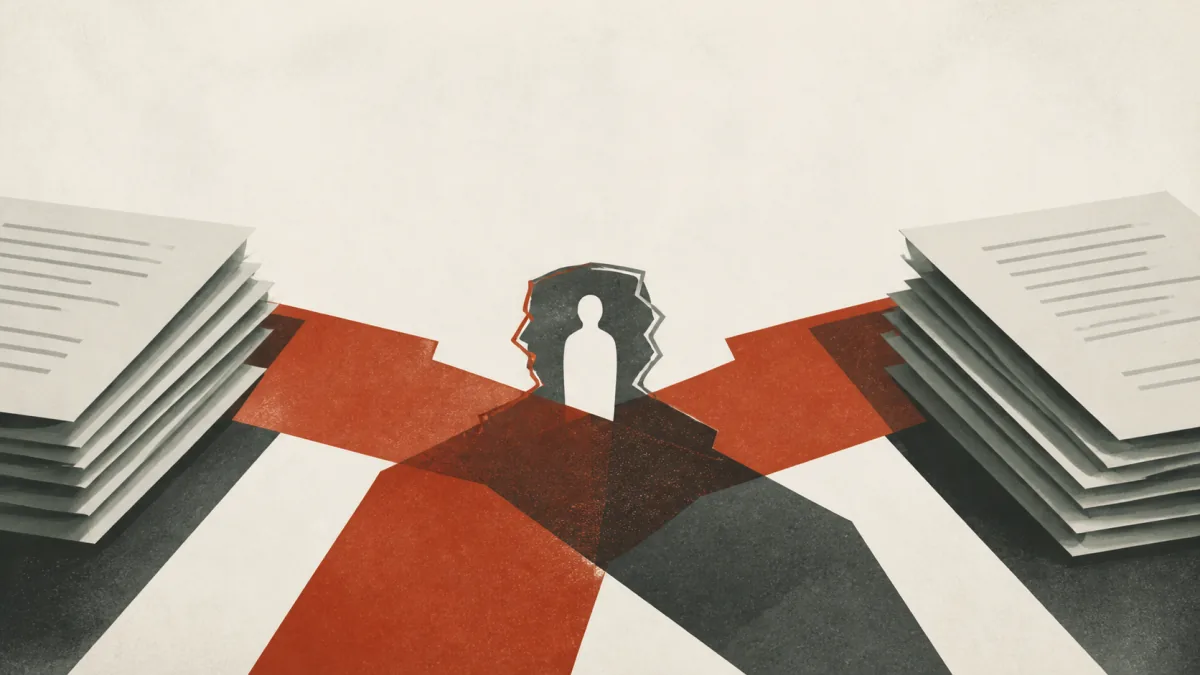
The controlled visual space matters here. Conference rooms, hallways, and long tables are clean containers for events that cannot be contained. Bodies sit still while language revises years of shared experience. Glass offers visibility without access. Characters can inspect one another, but the architecture gives them no reason to move closer.
The rowing sequence is the film’s most flamboyant variation on this principle. The image miniaturizes a prestigious physical contest until it resembles a model under glass. Tradition, wealth, and athletic force become beautiful, measurable, and strangely small. Mark’s advantage is not that he can out-row the old elite. He can build a different scale on which their status no longer guarantees victory.
Eduardo loses a friendship after it has already become a cap table
Eduardo prevents the story from becoming a simple fable about a brilliant monster. The film gives him generosity and grievance, loyalty and vanity, practical help and bad judgment. He writes checks, seeks advertisers, and offers Mark a stable “we.” He also freezes an account, misreads the company’s direction, and wants the social legitimacy that Mark claims not to need.
Their difference is not goodness versus evil. It is a difference in what their collaboration means. Eduardo continues to read the company through friendship. Mark increasingly reads friendship through authority: who controls the code, who decides the city, who appears on the paperwork, whose stake can be made negligible.
Sean Parker is dangerous because he gives that conversion a glamorous future tense. He understands that Mark does not merely want a useful website; he wants a scale at which the people who excluded him become irrelevant. Once that horizon appears, present-day obligations can be redescribed as provincial obstacles. Betrayal becomes strategy with good branding.
The confrontation over Eduardo’s diluted stake lands because the paperwork is only the final translation. What he discovers is that the common project he continued to read as a relationship had already been rewritten by the other side as control. The men did not suddenly cease speaking the same language. They finally lost the ability to pretend that they ever had.
It is another version of the opening scene. Mark can make every procedural step intelligible and still fail to answer the question the relationship asked.
The company became Meta; the solitude stayed put
As an industry map for 2026, the movie is obsolete. That statement requires no speculative user count.
Facebook, Inc. formally changed its corporate name to Meta Platforms, Inc. in October 2021. Meta reports two segments, Family of Apps and Reality Labs. Its Family of Apps product section lists Facebook, Instagram, Messenger, Meta AI, Threads, and WhatsApp; Reality Labs covers VR, wearables, and long-term AR work. Meta’s 2025 annual filing places AI in recommendation, advertising tools, new experiences, and future platforms; its July 2026 quarterly release presents AI as central both to the existing business and to the next generation of products.
The accurate summary is not that Meta abandoned the metaverse for AI. AI has moved to the foreground while immersive hardware remains part of a long-term platform strategy. Either way, Facebook is no longer the whole horizon. It is one entrance into a company spanning public feeds, private communication, recommendation, advertising, assistants, and devices.
The movie’s campus site now looks almost charmingly bounded. Its fantasy of Facebook as a single ever-expanding place was wrong. Its account of the emotional logic behind the place was not.
The final refresh works because loneliness here never meant a shortage of communication tools. It means the inability to control another person’s response. A designer can arrange fields, rank lists, grant permissions, and enlarge a network. He cannot write a function that makes a particular person forgive him. The system can reduce the cost of sending a request; it cannot automate confession, waiting, or the possibility of rejection.
That is why the movie benefited from missing the product future. A film preoccupied with correctly guessing short video, AI assistants, or glasses would now resemble an expired presentation. The Social Network compresses its technological ambition into an older and more durable desire: to make scale prove that you deserve love. Product names cannot outlive that desire.
The blind spot: whose world paid for this precision?
There is a strong defense of the movie’s narrowness. It is a chamber tragedy about male friendship, status, and power. Expanding it to encompass every later dispute over privacy, labor, political influence, moderation, and advertising could have turned character drama into a corporate briefing. Its severe focus is one reason it moves with such force.
But focus has a cost, and the film itself supplies the evidence.
Erica has the clearest moral sight in the opening, then largely becomes recognition that Mark cannot recover. Facemash shows women’s images becoming product material, but the people inside those images rarely retain lives of their own. Other women are often positioned as party rewards, emotional crises, assistants, or interpreters who explain consequences to men. The movie knows misogyny and status hunger belong to its engine, yet returns most of the emotional weight to the loss between Mark and Eduardo.
That choice narrows its imagination of social-network harm. The central catastrophes are a founder sitting alone and a cofounder betrayed. The people who are ranked, captured, and watched remain farther from the narrative center. By 2026, platform questions extend across advertising, privacy governance, recommendation systems, and regulation. A film from 2010 cannot be faulted for failing to predict every consequence, but it can be judged for understanding the founder’s isolation more deeply than the experience of those turned into inputs.
The opening and Facemash sequence prove that the gendered line of power was already available to the filmmakers. They identify it and then stop following it at the depth afforded to male friendship. That is the principal reason this is a 9.0 rather than an even higher score.
9.0 out of 10: a machine built around the one step it cannot automate
Everything celebrated as “fast” in The Social Network eventually serves an image of waiting. The dialogue is fast. The cutting is fast. The company grows fast. Code accelerates social gestures. Then the final scene reduces power to a person who must wait for somebody else to decide.
Fincher’s precision is not merely a cold visual signature. Dim rooms, fixed frames, glass walls, hallways, and long tables place people inside systems that appear manageable. Shame, loyalty, envy, apology, and desire refuse management. Sorkin lets the characters sound more articulate than ordinary people; Fincher keeps showing that articulation has not brought them closer.
A 9.0 means this remains essential viewing and rewards another complete watch. Its meaning also changes as the company outside the film changes. It is not an accurate history of Facebook, and it is not a prophecy of Meta. It is a tragedy about a personality and an institution amplifying one another: the person prefers measurable connection to vulnerable intimacy, and the institution discovers immense value in making connection measurable.
Interfaces disappear. Corporate priorities migrate. The figure waiting at the screen does not become obsolete.
Sources
- AFI Catalog: The Social Network (2010 release, David Fincher, Aaron Sorkin, and principal production credits)
- Library of Congress: 2024 interview with Aaron Sorkin (nonfiction and dramatization, language as music, the 172-page script, timed rehearsal, and his retrospective on social media)
- OurStage: interview with sound designer Ren Klyce (Fincher’s sound-pressure, intelligibility, and urgency goals for the opening bar and Ruby Skye scenes)
- Academy of Motion Picture Arts and Sciences: 83rd Academy Awards (eight nominations and wins for adapted screenplay, original score, and film editing)
- U.S. SEC: Facebook’s 2021 Form 8-K (the October 28, 2021 change to Meta Platforms, Inc. and the Family of Apps/Reality Labs reporting structure)
- U.S. SEC: Meta’s 2025 Form 10-K (filed in 2026; current product scope, AI, advertising, the long-term Reality Labs strategy, privacy governance, and regulatory risk)
- Meta Investor Relations: Q2 2026 results (July 29, 2026; Meta’s official positioning of AI in its core business and next-generation products)