Spider-Man: Homecoming (2017): Tony's Best Line Is Also the One That Broke Peter
Spider-Man: Homecoming (2017)
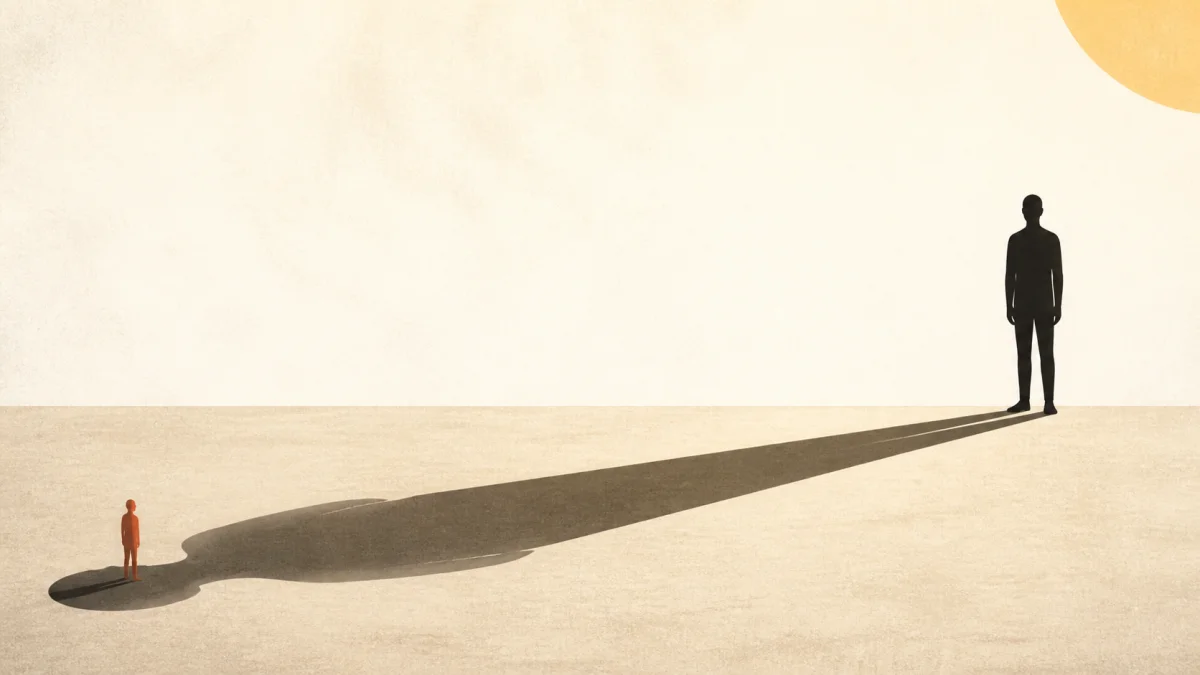
Spider-Man: Brand New Day opened this week — July 29 in Taiwan, two days ahead of its July 31 US release — and every screen in town is currently occupied by a man in a mask. I spent the week rewatching a nine-year-old film instead, because one line from Homecoming has been lodged in me since 2017, and I have finally worked out why it wouldn’t come loose.
The line lands after the ferry. Peter has ignored a direct instruction, staked out Toomes’s arms deal alone, and watched a malfunctioning alien weapon cut the Staten Island ferry in half. Tony cleans up the mess and takes the suit back. Then he says this:
What if somebody had died tonight? Different story, right? ’Cause that’s on you. And if you died, I feel like that’s on me. I don’t need that on my conscience.
Most people remember the sentence that follows, because it’s the one that plays well on a poster: “If you’re nothing without this suit, then you shouldn’t have it, okay?” Tony hears himself, winces, and mutters “God, I sound like my dad.” Peter, fifteen years old and out of arguments, can only offer: “I don’t have any other clothes.”
But the sentence that set the next decade of this character in motion is the one before it. And what I finally understood on this rewatch is that it isn’t teaching Peter responsibility. It’s confiscating it, the same way Tony confiscates the suit.
The blocking says it before the dialogue does
Notice that Tony isn’t there when the scene starts. He conducts the first half of the argument through an empty Iron Man shell — a father outsourced to hardware. It’s only when Peter shouts that if Tony actually cared he’d be here in person that Tony steps out of the armour and reveals he’s been standing on that rooftop the whole time.
That sequence isn’t decorative. In the first half, Tony maintains distance through sarcasm; he opens the scene with “Previously on ‘Peter Screws the Pooch’,” reducing a near-catastrophe to a recap gag. In the second half, the armour opens, the distance collapses, and the words get heavier. The real reprimand can’t begin until he’s physically present — which is the most honest answer the film ever gives to the question of what Peter actually is to him. Not a colleague. Not a recruit. A kid you have to stand in front of before you can bring yourself to shout at him.
And what he shouts divides responsibility into two parts that are not remotely the same size.
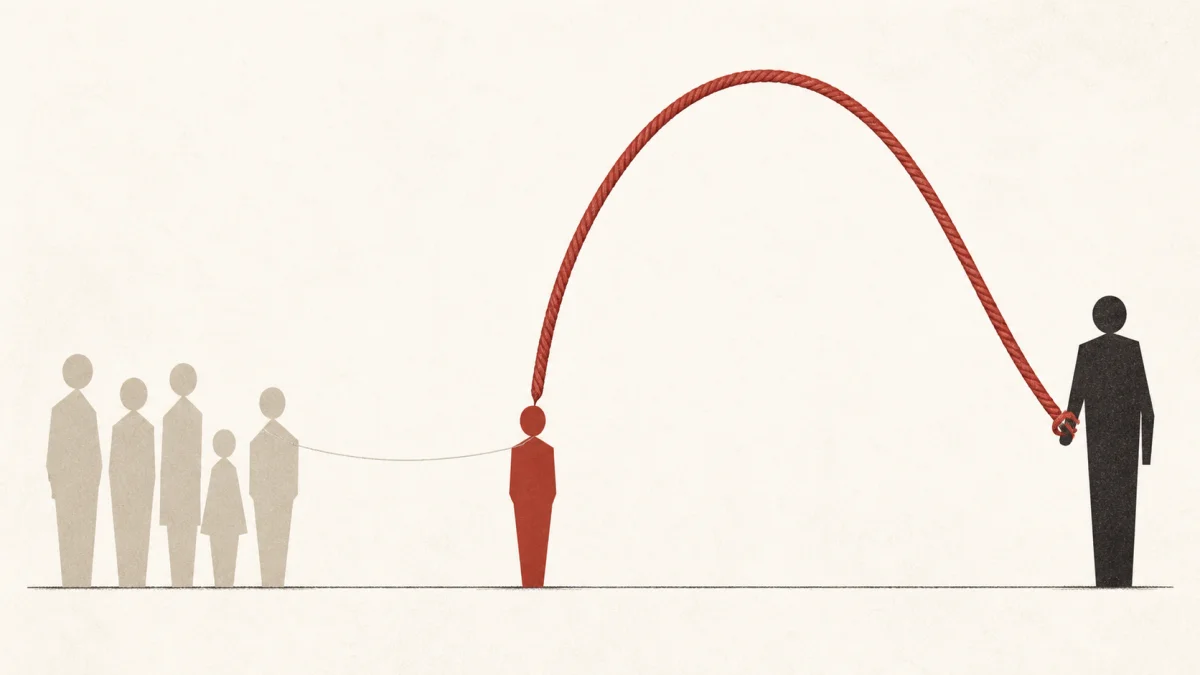
Two arrows pointing opposite ways
If somebody dies, that’s on you is a demand. It treats a fifteen-year-old as an adult who must answer for outcomes.
If you die, that’s on me is protection. It takes the same fifteen-year-old and files him back under “child.”
In the space of two sentences Tony asks Peter to grow up and informs him that he can’t. And then he adds the clause that gives the game away: “I don’t need that on my conscience.” What he’s guarding isn’t only Peter’s life. It’s his own record. That’s precisely why the line is moving rather than merely paternal — it carries the thing Tony has never resolved since Iron Man 3, which is that he cannot tolerate being the cause of harm.
It also explains the two other lines in the same scene. “Do you know I was the only one who believed in you?” And: “I just wanted you to be better.” Better than what? The sentence never finishes, but it doesn’t need to. Peter was never being raised as a person in his own right. He was being raised as a correction.
Director Jon Watts has been unusually precise about this. He described Tony as “this reluctant mentor – or the unintentional mentor – to Peter.” Note the word he doesn’t use. It’s Tom Holland who says the other thing outright: Tony “very much took on the mantle as his father figure.” Producer Amy Pascal goes further and defines the character by it — Peter, she says, is “always looking for a father figure.” Put the three statements side by side and you have the whole problem in one line: a reluctant mentor on one side, a boy actively looking for a father on the other, and nobody responsible for the gap.
What the film hands him, and what it takes away
The smartest structural decision in Homecoming is that half of Peter’s capability belongs to someone else. The suit is Tony’s build: an onboard AI, a parachute, a suite of functions Peter can’t even name, and a constraint layer called the Training Wheels Protocol. The film’s entire second act is a teenager trying to remove restrictions placed on him by an adult.
That’s the target the sharpest 2017 criticism went for. Kaila Hale-Stern at The Mary Sue, writing the day before the US release, put it bluntly: Peter becomes “a sort of Iron Man Lite in his Stark-enhanced suit rather than rely on the traditional elements that defined his heroism–namely, his quick wit and spider-given acrobatic abilities.” The same review lands a harder blow on Robert Downey Jr.’s function in the film, calling him “a Tony Ex Machina who just keeps flying in from time to time to save the day and then disappearing again.”
I want to be honest about how much weight that view carried, because it’s easy to overstate it in hindsight. The complaint was real and specific, but it was never the critical consensus. Homecoming runs 133 minutes (Taiwanese distributors listed it as 134 at the time, a one-minute discrepancy) and sits at 92% on Rotten Tomatoes across 396 reviews and 73 on Metacritic from 51 critics — the steadiest reception in the series. Runtime and scores were both checked on 2 August 2026; the scores will drift. Time Out’s Tom Huddleston pushed back directly: “Tony Stark’s regular cameos don’t unbalance the film: he’s more guardian angel than full-blown Mr Miyagi-style mentor.”
More interesting still: the film knows. In the closing scene Tony offers Peter a full Avengers berth — “with a little more mentoring… you could be a real asset to the team” — and Peter turns it down: “I’d rather just stay on the ground for a little while. Friendly neighborhood Spider-Man.” The critic Jackson McHenry argued at the time that this refusal is the most heroic thing in the movie, and he’s right. Homecoming ends on an anti-Stark thesis: the most important thing a kid can learn is how to decline the power an adult is holding out to him.
So no, I don’t think “Iron Man Lite” is the film’s mistake. It’s the film’s subject. It states the problem clearly and lets Peter answer it correctly, once.
The trouble is that “if you died, that’s on me” outlived the answer.
What the line grew into
In Civil War, Peter gives Tony the MCU’s substitute for the Uncle Ben speech: “When you can do the things that I can, but you don’t, and then the bad things happen, they happen because of you.” Look at the shape of that. It is already a totalising claim — every unprevented harm is chargeable to me. Tony’s line doesn’t correct it. It adds a second storey.
In Infinity War, Peter dissolves on Titan and his last words are “I’m sorry.” Not fear. An apology. In Endgame, kneeling beside a dying man, he reports in: “We won, Mr. Stark. We won and you did it, sir.” He’s still calling him sir.
Then Far From Home turns the whole structure into a prop. Fury hands over a pair of glasses in a case engraved “For the next Tony Stark, I trust you,” running an AI whose acronym, E.D.I.T.H., stands for “Even Dead, I’m The Hero.” It’s a very Tony joke, and also a literal statement that he still occupies the position from beyond it.
The only character in that film who genuinely helps is Happy Hogan, on a plane, saying this:
You’re not Iron Man. You’re never gonna be Iron Man. Nobody could live up to Tony. Not even Tony.
“Not even Tony” is the most important qualifier in the entire series. It isn’t comfort — it’s dismantling. The standard Peter has been carrying was never met by the man it’s named after.
Spoilers for Spider-Man: Brand New Day from here — skip to the last section if you’d rather not
With Brand New Day in cinemas, that 2017 line reads as something else entirely.
The film is directed by Destin Daniel Cretton and runs 145 minutes (also checked 2 August 2026). Per Sony’s own Taiwanese synopsis, it is set four years after the events of No Way Home. Peter is an adult, living alone, having chosen to erase himself from the lives and memories of the people he loves, fighting crime full-time in a New York where nobody knows who he is. Cretton describes him as dedicating his entire existence to being Spider-Man. The accumulated pressure changes what he is: most visibly, he no longer needs mechanical web-shooters, because the webbing now comes out of his wrists.
Line the two films up and the arithmetic is almost too neat.
If somebody dies, that’s on you — so he can never stop. Not for an hour. If you die, that’s on me — so he can never let anyone carry him again.
A person who believes both propositions completely ends up in exactly one place: deleting himself from everyone’s life and carrying the whole thing alone. The memory-wipe at the end of No Way Home looks like a sacrifice made to protect MJ and Ned. Structurally, it’s Tony’s line taken to its logical extreme. Brand New Day is what that decision looks like after four years of uptime.
As for the organic webbing — it is the most precise image on this whole thread. Nine years ago half of his ability was a gift from someone else. Now it grows out of his own body. He finally doesn’t need the suit. The price is that he doesn’t need anyone.
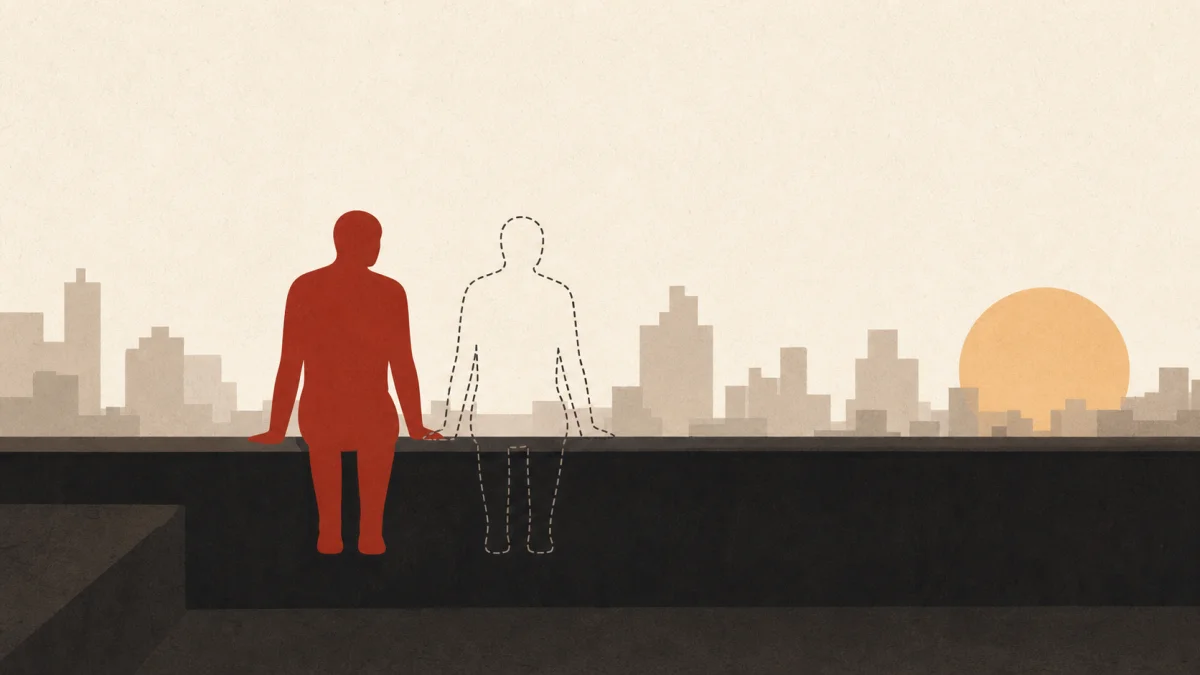
If Tony were still alive, how would he help?
This is a thought experiment, not a plot reading. Tony does not return in Brand New Day, and I’ve found nothing in any reliable source suggesting otherwise. What follows is extrapolation from the text of the earlier films.
Start with the unflattering answer: Tony would help in the way he is best at, which is the way that wouldn’t work. He’d build a better suit, write a smarter AI, fly in, resolve the situation, and leave. That is what he did every single time. The “Tony Ex Machina” complaint landed in 2017 precisely because what Tony gave Peter was never judgement — it was equipment. And equipment is not what Peter is short of in 2026.
To be genuinely useful, Tony would have to do something he never once did: take the line back.
While “if you die, that’s on me” stands, Peter can never learn to hand responsibility to anyone else. In holding Peter’s share, Tony also demonstrated that a single person can carry all of it — and his own ending is the endpoint of that demonstration. He snapped his fingers, absorbed every life in the balance, and died. Peter watched the whole thing from a few feet away.
So the best help Tony could offer isn’t drawn from any of his strengths. It’s repeating Happy’s sentence and adding himself to it: You’re not me. You’re never going to be me. Nobody could live up to Tony — I didn’t. And I got it wrong back then: your death wouldn’t have been on me, and your life isn’t to my credit either. It’s yours. You decide what it’s for.
Tony can’t say that. He isn’t built that way, which is exactly what makes the character compelling and exactly where he runs out. So Peter walks this stretch alone in Brand New Day, and whatever eventually releases him from that sentence, it was never going to be Tony.
8.9/10: the flaws are real, and they don’t cost much
I’m giving Homecoming an 8.9.
The points are earned in concrete places. The best scene in the film isn’t an action beat — it’s the five minutes Toomes spends driving Peter to the dance. The camera barely moves. Michael Keaton does the whole thing with one glance in a rear-view mirror, and a suburban car ride becomes the tensest stretch in the MCU. No Stark technology required. Its sense of scale is just as good: the world of this film is the size of Queens, the stakes are one teenager’s dance and one father’s livelihood, and it proves that’s enough.
The two flaws I’ll grant are equally concrete. First, six credited writers leave visible seams; the high-school material and the main plot don’t always mesh. Second, and more importantly: the film raises the question of Peter’s outsourced agency with total clarity, then answers it with a single refusal in the final minutes. That’s too light a touch. The confiscation scene is written too well — well enough to drown out the film’s own conclusion. Nine years later, what audiences remember is Tony’s line, not Peter saying he’d rather stay on the ground.
Together, though, they only cost 1.1 points, and I’m not going to dress the reason up: I simply love this film. I stand behind every criticism above. Analysis doesn’t overwrite what a film does to you while you’re watching it, and these flaws — clearly as I see them — were never heavy enough to take that away.
Homecoming is a film about refusing to become somebody else’s sequel that accidentally made becoming somebody else’s sequel look magnificent. In 2017 that contradiction was a flaw. Set it beside Brand New Day in 2026 and it reads like a prediction.
Sources
- Spider-Man: Homecoming — Wikipedia (plot, production, reception)
- Spider-Man: Brand New Day — Wikipedia (director, cast, plot)
- Spider-Man: Brand New Day — official Taiwan site and atmovies (Taiwan release date and official synopsis)
- Spider-Man: Homecoming — IMDb quotes and the subtitle transcript (dialogue verified line by line; the English Wikiquote entry renders the line as “I think that’s on me,” which conflicts with every other source and is not used here)
- Rotten Tomatoes and Metacritic (scores checked 2 August 2026)
- Kaila Hale-Stern, The Mary Sue (6 July 2017) (“Iron Man Lite” and “Tony Ex Machina”)
- Tom Huddleston, Time Out (the counter-argument on Stark’s screen time)
- Jon Watts interview, Den of Geek (3 July 2017) (“reluctant / unintentional mentor”)
- Amy Pascal interview, ScreenRant (2019) (“always looking for a father figure”)
All three illustrations in this piece were made for One Film a Day. They contain no film stills, poster compositions or actor likenesses.