A Brighter Summer Day (1991): Four Hours Isn't a Test of Patience. It's How Long the State Takes to Get Inside a Home.
牯嶺街少年殺人事件 (1991)
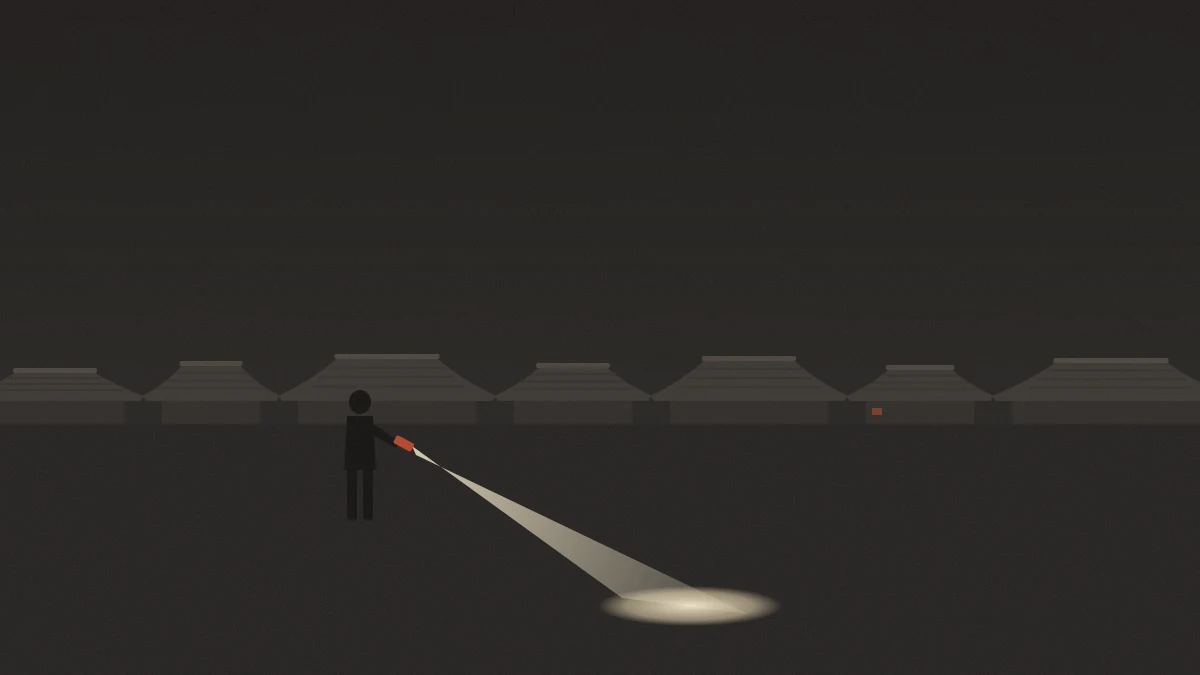
About two hours and forty minutes into A Brighter Summer Day, a mild-mannered civil servant sits in a bare room being told, yet again, that his written account of his life has left too much out. Then the man questioning him offers some reassurance. In the English subtitles it reads: “Don’t worry. We have all the time in the world.”
It is the most frightening line in the film, and in this review’s view it comes close to being a manifesto for how the film works. The state in Edward Yang’s 1960 Taipei can afford to be patient. It can wait for a man to fill page after page until dawn. It can wait for a household to go quiet. And the film, which runs 237 minutes in its restored form, has decided to wait with it.
This matters because A Brighter Summer Day has spent most of its life being asked to hurry up. When it opened in Taipei on 27 July 1991, local audiences saw a shorter cut. Hung Hung, one of Yang’s three co-writers (credited on the film as Yan Hong-ya), told the Criterion Collection in 2016 that distributors at the time would not release a four-hour film, so Yang assembled a three-hour version himself and was never satisfied with it. Then comes the detail that matters most here: “The biggest omissions were the scenes involving Xiao Si’r’s father and the White Terror.” The shorter version, he said, “took the focus off of the political content and placed it more heavily on the stories of the children.”
A separate account points the same way. Tony Rayns, who watched the film come together, described the roughly three-hour cut that won the Special Jury Prize at Tokyo in 1991 as “more tightly focused on Xiao Si’r and Ming than the integral version.” (The Taiwanese theatrical cut and the international cut were not identical — Chen Yi-wen, quoted by the Taiwanese site Punchline from the Chinese-language book Zaijian Yang Dechang (“Goodbye, Edward Yang”), puts the first at two hours fifty and the second at three hours — but both accounts describe the trimming going in the same direction.)
So the familiar complaint — isn’t it too long? — has an empirical answer. Somebody did make it shorter. What got cut hardest was the state.
One Film a Day’s verdict: the length of A Brighter Summer Day is not a test of patience; it is the argument. State violence doesn’t enter this boy’s world in a single scene. It seeps in, minute by minute, through ordinary objects — a flashlight, a radio, a disputed exam score — and that process cannot be sped up. Shorten the film and the state’s presence in the house thins out. The one person the film never regards with the same patience is Ming: two hundred-odd minutes let the audience watch her killer’s father rewrite his own life again and again, while she is seen only from outside. 9.4.
Which film, exactly?
The version most people can see today exists because of a rescue. In 2009 the uncut film was restored by the Cineteca di Bologna’s L’Immagine Ritrovata lab together with The Film Foundation’s World Cinema Project, Taiwan’s Central Motion Picture Corporation and the Edward Yang Estate, working from the original 35mm camera and sound negatives. Criterion made its own 4K restoration for its 2016 release. Before these restorations, the film lived mostly in abridged form: the 1992 Berlinale Forum catalogue lists it at 185 minutes, and its first Japanese theatrical release ran three hours and eight minutes. Criterion describes it as having been available “for decades only in abridged form on low-quality home video.” In Taiwan, the scholar Hsieh Shih-tsung notes, researchers long had to make do with a VHS copy at the film archive or pirated discs, so that for many viewers the film left an impression of little more than darkness. For a film so preoccupied with light, that is a cruel way to be remembered.
Yang himself was unapologetic about the running time. Interviewed by Rayns in June 1992, he said: “Even though the full version runs four hours, I think it’s very lean. My rough-cut was 20 minutes longer, and if I hadn’t cut those 20 minutes out it would have been flabby.” Hung Hung also recalls that Yang had hoped for Cannes and was told there were too many long films that year. The film has been paying for its length from the beginning.
Taipei, 1960 — and why look back in 1991
Title cards keep the chronology tidy. A prologue dated summer 1959 shows a father pleading with an unseen school official, refusing to believe the boy scored only 50 in Chinese; the result is that Xiao Si’r is placed in the night school of Jianguo High (then a provincial school). The main story begins in September 1960, and a closing card lands in the summer of 1961. According to Taiwan’s Central News Agency, the night-school detail is Yang’s own. Yang was born in Shanghai in 1947 and came to Taiwan with his family in 1949.
An opening card sketches the background: millions of mainland Chinese fled to Taiwan with the Nationalist government, and their children grew up in the unease of parents uncertain about the future, many forming gangs for identity and security. The card’s “millions” records a feeling, not a census. Working from declassified files, the sociologist Yeh Kao-hua puts the postwar mainland migrant population in Taiwan and Kinmen–Matsu at 1,024,233 as of 16 September 1956.
By the autumn of 1960, martial law was more than eleven years old. It was imposed across Taiwan Province from 20 May 1949 and lifted only at 00:00 on 15 July 1987 — thirty-eight years. In 1958 several security commands were merged into the Taiwan Garrison Command, and according to Taiwan’s National Human Rights Museum, from 1959 its security department was one of the main units handling political cases. Another of the museum’s entries is equally clear that the people swept up in the White Terror were not only communists: communist sympathisers, Taiwan independence activists and pro-democracy figures could be arrested, and so could ordinary people with no particular politics at all.
Mr. Zhang is one of those ordinary people — in Rayns’s phrase, a “bookish civil servant.” On a typhoon night he is taken from his own doorway and questioned about a college classmate, a coworker’s friend, and his years in Shanghai. The English subtitles call the men who take him simply the “Secret Police.” One of the film’s producers, Yu Wei-yen, has said in a published conversation that he himself played the Garrison Command officer in charge.
Why return to 1960 in 1991? In a director’s statement dated June 1991, Yang wrote that the film is “a story about a time when the Chinese people, on the Mainland or in Taiwan alike, have been too intimidated or too conformed by the official versions of history to have the interests to remember.” That “deliberate forgetfulness,” he argued, left spaces that “authorities of various kinds” could exploit, and the film was “a story about human dignity and self-respect under such conditions.” He dedicated it to “my father and his generation, who had suffered so much for my generation to suffer less.”
In an interview with the critic Huang Chien-yeh he put it more bluntly: what interested him was not Mao Wu’s life or motive but the fact that such a thing could happen in that environment. His generation were in junior high in 1961, he said, and by 1991 they were destined to be the pillars of society — that era held many clues for understanding the present, and that was his main motivation for making the film.
The timing has one more layer. The National Human Rights Museum notes that lifting martial law in 1987 did not dismantle the martial-law system. Only in 1991, when the Period of National Mobilization for Suppression of the Communist Rebellion was ended and its Temporary Provisions and the Statute for the Punishment of Rebellion were abolished, did Taiwan begin its gradual return to constitutional rule. A film about 1960 was released in the same year that slow unwinding began — and the Garrison Command itself was not abolished until July 1992.
The real case, and what Yang chose to let go
The killing in the Chinese title happened. At around 10 p.m. on 15 June 1961, on Guling Street in Taipei, a teenager named Mao Wu stabbed his girlfriend Liu Min to death. The next day’s United Daily News gave their ages as sixteen and fifteen, under a headline calling them “only fifteen or sixteen.” On 7 August 1961 the Taipei District Court sentenced him to fifteen years. Because he was under eighteen, Article 63 of the Criminal Code ruled out death or life imprisonment, and the judgment, as reproduced by the writer Kuan Jen-chien, described fifteen years as the heaviest term within the statutory range. After appeals and retrials, the sentence was fixed at ten years on 22 February 1963.
That makes the film’s closing card worth flagging. It says the Taipei District Court sentenced Xiao Si’r to death in the summer of 1961 and that the sentence was later reduced to fifteen years. That is fiction. Article 63 — unchanged from the Code’s 1935 promulgation until 2005 — barred death sentences for offenders under eighteen, except for the killing of a lineal ascendant such as a parent. One Film a Day doesn’t know why Yang changed it; when he spoke to Rayns in 1992 he even placed the murder in 1960. But viewers should know the card is not history.
Yang was frank about how loosely he held the facts. He told Rayns he knew several people close to the boy and could research the case in detail, “but only for a very short period did I feel any need to be faithful to the facts.” The real killer belonged to a gang; Yang deliberately kept Xiao Si’r out of one, because “it gets interesting only when a good guy does bad things or vice versa.” And he explained why most of his contemporaries still remembered the case when their elders had forgotten it: “all of us had sympathy with the kid involved. It could have happened to any one of us.”
That decision is the hinge of this review’s argument. Make Si’r a gang member and you have a gang film, in which the killing is where gang logic ends up, and ninety minutes will do. Keep him out, and the film has to answer a harder question: how does a boy who reads at night by the light of a flashlight he pocketed at a film studio end up there? The answer isn’t a cause. It’s an environment, and an environment can only be filmed slowly.
The knock comes two and a half hours in
Lay the film’s running time out using the timestamps of a subtitle file that matches the 237-minute cut, and the structure is itself an argument. The flashlight is in Si’r’s hands within the first few minutes. At 2:30:59 his sister, transcribing an Elvis record as a favour for Cat, says she could swear the singer is singing “a brighter summer day” — the half-heard lyric that gives the film its English title. Less than half a minute later there are men at the door asking for Mr. Zhang. The film is nearly two-thirds over.
For the next eighteen minutes or so, it cuts between the interrogation and the children’s ordinary days. The interrogation is mostly paperwork. Mr. Zhang is told to write his history down, then write it again, and each time he is pressed on who and what he has left out; “Leaving out something you know is the same as lying,” his questioner tells him. He begins by insisting he has lived an honest life and has nothing to hide. By the end he is asking for a little more time to finish.
A ninety-minute film could show a father being taken away. It could not show this patience. The knock lands as hard as it does because by then the audience has lived in the house for two and a half hours — seen the father argue with an official over his son’s score, seen him settle in beside the radio for the evening news — so what changes is the climate of the whole household, not merely the plot.
The radio is the second thread. In a 2022 article, the scholar Ling Zhang counts ten appearances of the radio and notes that Mr. Zhang’s after-dinner news listening is exactly what the secret police interrupt. After they take him, the set goes on broadcasting typhoon warnings — residents in southwest Taiwan should prepare for floods — to nobody. As she puts it, Zhang “has already been detained, leaving his usual listening spot vacant.” After his release, she observes, he never appears to listen to his radio again.
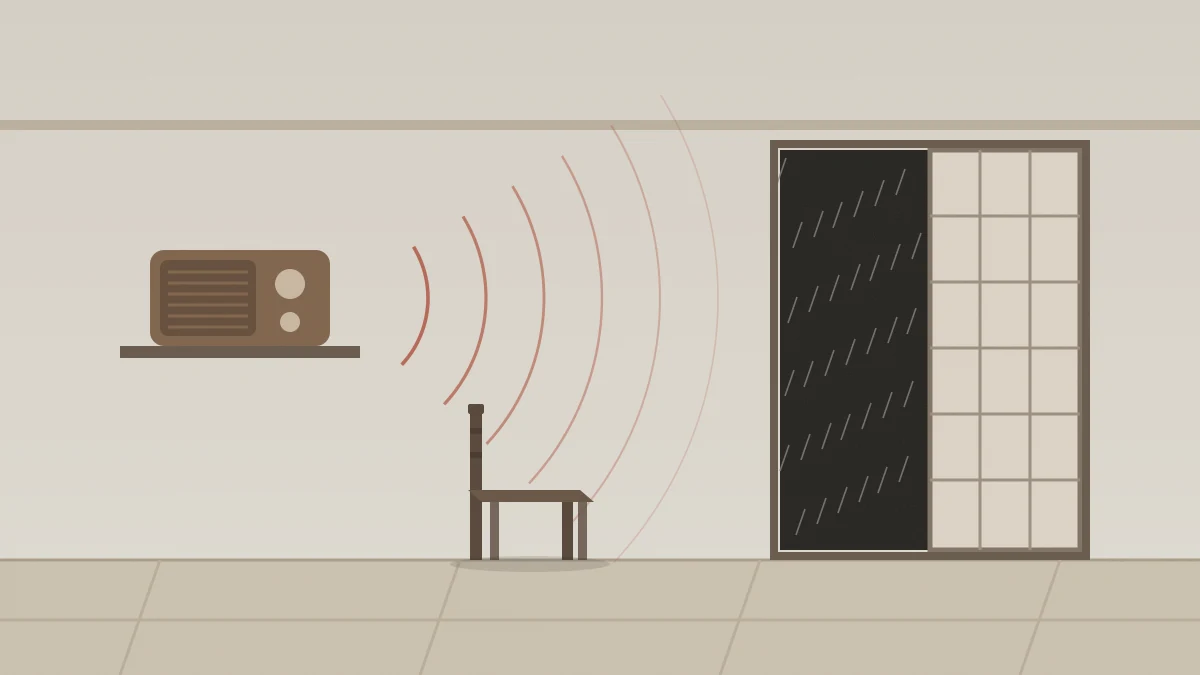
One more detail ties the radio to the interrogation. The man questioning Mr. Zhang says he studied music and calls himself an artistic type, and shortly after the questioning begins, one of the interrogators sings a classical Chinese art song, the “Red Bean” song (Hong Dou Ci), to his own accompaniment. Speaking to Huang Chien-yeh, Yang said the choice of song was never fixed — the point was that it was an art song, because art songs were what the radio kept stiffly pouring into his generation as “Chinese culture,” which he called a misunderstanding. He described the character as the embodiment of the military’s political-warfare school — and added that the father’s ordeal is directly connected to the whole killing.
That last remark matters because the film itself never spells the connection out; it leaves the viewer to make it. As Yang put it to Rayns: “When people ask me what the murder has to do with the political climate, I always say: ‘Go back and watch it again!’”
A flashlight is not a symbol, which is the problem
Si’r takes the flashlight from a film studio near his school. Early on, he and Cat sneak in to watch a shoot. Si’r is caught and hauled into the office, where his student number is taken down, and in the commotion that follows — the critic Fei Nei, whose shot-by-shot breakdown this account follows, thinks Cat smashed a window to get him out — Si’r walks off with the flashlight lying on the desk. At home Si’r sleeps on the lower bunk of a cupboard in the family’s Japanese-style house, slides the door shut, and reads by it. Rayns watched that scene being filmed on location in Jinguashi in November 1990, in very low light, with sync sound.
A common reading makes the flashlight a symbol of light and reason. According to the writer Chang Yao-sheng, though, Yang told the critic Lo Wei-ming that he gave it no conscious symbolic meaning while shooting. Most of the film was shot at night, a night scene needs a light source, and having the protagonist carry one was simply the best solution. Once the film was finished, he said, he could see the meanings it had taken on, liked them, and allowed that his subconscious might have wanted them there. The critic Godfrey Cheshire, in his essay for Criterion’s 2016 release, reports that Yang named the spotty electricity, and the resulting periods of little or no light, among his chief memories of the period.
This review thinks that makes the flashlight more disturbing, not less. A symbol is something a director plants for you to decode. This flashlight is first of all a practical object: a boy needs light to read by at night, and so, by Yang’s account, did the night scenes. The same beam that lights a page in a cupboard lights a massacre later on: on the typhoon night, a Taiwanese gang once allied with Honey falls on the 217s, and in Cheshire’s account the slaughter is experienced mostly as screams and clatter, with “the only illumination” coming “from candles, a careening lightbulb, and that flashlight.”
That is what seep means here. Gang violence has no lighting rig of its own; it borrows a schoolboy’s reading light. State violence has no stage of its own either; it borrows a father’s listening habit and his handwriting. And Yang cared about exactly how dark the darkness was. Hsiao Yeh, who drafted an early version of the script with him, remembers that on this film Yang complained the lab had developed the negative’s light and shade wrongly, and wanted to spend a large sum reshooting it. Told that no audience would care whether a shot came out grey or black, Yang replied: “But I care.”
The flashlight leaves the film at the studio. Near the end, Si’r runs into the director who screen-tested Ming; the man asks where she has gone and praises how naturally she cries and laughs, and Si’r sneers that someone who can’t tell real from fake has no business making movies. According to Fei Nei, he leaves the flashlight behind. By the subtitle timestamps, less than twenty seconds later he is at Cat’s house, saying he has only come to borrow a book. He leaves with a knife.
A camera that won’t rank anything for you
There is also a formal reason the length is necessary. David Bordwell counts only about 520 shots across the four hours, averaging about 28 seconds each. Rayns describes a film “composed almost entirely in elegant wide-angle shots, most of them with a fixed frame,” and Bordwell notes that even gang fights and deadly chases are “observed with a dryness and detachment.”
A camera like this seldom sorts events by importance. A family dinner, a gang parley and a street fight mostly get the same distance. Yang only occasionally embeds medium shots and closer views in the wide framings, “anchoring his characters enough for recognition and revelation but not enough for the heated-up empathy encouraged by mainstream filmmaking,” as Bordwell puts it. You have to notice for yourself what is shifting — which is precisely what the adults in the film fail to do. Bordwell reaches the conclusion this review shares: “The film needs its four hours to develop all these motifs and to render events and milieus as gradually changing.” Cutting a film like this doesn’t just shorten it. It does the selecting on the viewer’s behalf, which is the one thing the film is built to refuse.
The exceptions are telling. Bordwell notes that editing does come into play during some tense conversations, “notably when Si’r’s father is undergoing police interrogation.” A film that rarely cuts to tell you what matters does cut at the table where the state applies pressure, and that is the scene Bordwell singles out. This review reads that not as an inconsistency but as a deliberate formal emphasis.
Speaking to Huang Chien-yeh, Yang said that everything he did with style was tied to content, and that in every minute he wanted to raise the film’s dramatic density. He told Rayns that the writers had built “detailed psychological profiles and personal histories for virtually every character in the film,” enough that “if someone asked me to make a 300-episode TV series about these people, I’d have the material to do it.” Read next to this, his “very lean” remark stops sounding like a director defending his baby and starts sounding like an engineering report: four hours is what the material looked like after compression.
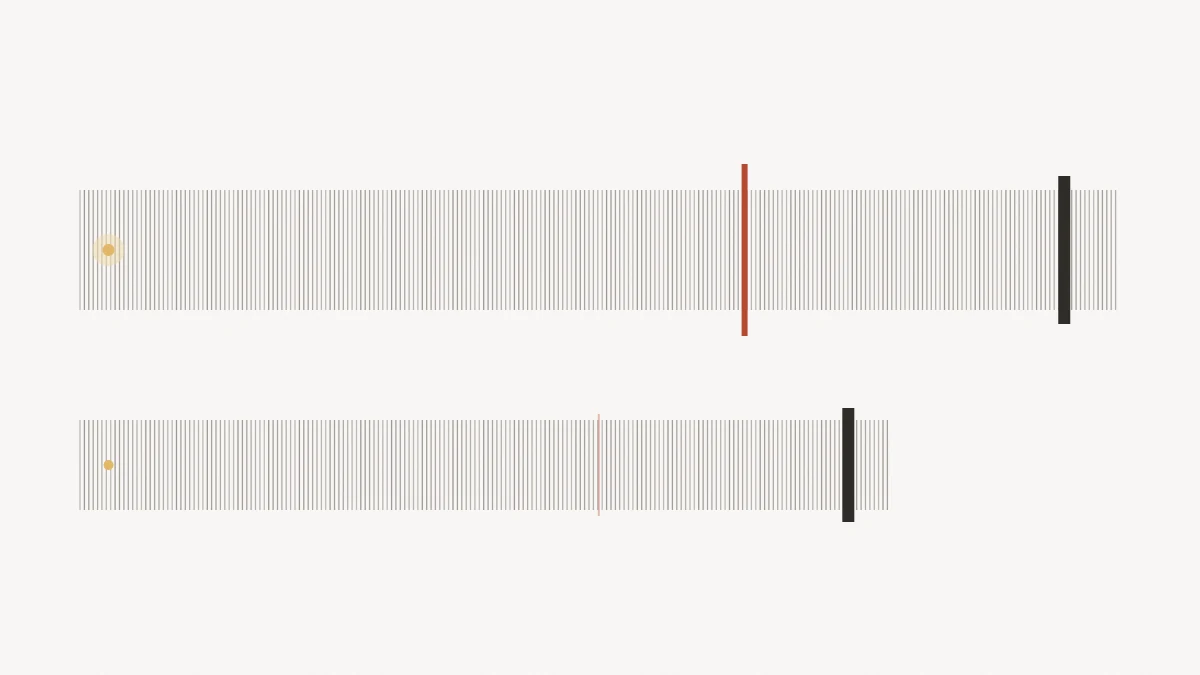
The design has a real cost, and this review won’t pretend otherwise. Watching the fine cut in May 1991, Rayns noted “well over 100 speaking parts,” and Yang’s own statement says three-quarters of the cast were appearing on camera for the first time. Time Out calls the film “masterly” but concedes that as a story of gang rivalry “it’s often a little obscure, so numerous are the characters.” Keith Phipps, in a 2024 conversation for The Reveal, makes the same complaint more plainly: a film in which many characters wear school uniforms and are seldom seen in close-up “can make it hard to keep track of who’s who.” The first hour really is a crowd scene, and the knock doesn’t come until two and a half hours in. Anyone who gives up before then never reaches the film’s argument.
The case against: 237 minutes, and Ming is still out of focus
The most direct attack on a review like this one was published in 1993. In Taiwan: A Radical Quarterly in Social Studies, Huang Yu-hsiu argued that the film “tells the story of the murder of an unfaithful woman,” and that by treating that murder as “something less important than the film’s structure,” it consolidates, once more, the very system built on it. In other words, a review praising the film’s structure and length as its argument may be doing exactly what Huang describes.
One Film a Day thinks she is half right, and right in a specific place.
First, the half she gets wrong. The film does not share the boys’ view of the girls around them. Cheshire puts it precisely: “for the boys in A Brighter Summer Day, girls are commodities to be claimed, passed around, fought over.” That is the world the film shows, not the position it takes. Yang said the real victim’s background was “very similar to the one I gave Ming; that’s why I had such sympathy for her.” And Ming’s last words to Si’r are the film’s coldest rebuke to his rescue fantasy: she asks whether he really thinks he is the only one who can change her, then tells him she is like the world, and the world does not change. The scholar Hsieh Shih-tsung writes that Ming looks like a femme fatale, but that, seen from another angle, her absolute powerlessness has made her an extreme political realist.
Now the half she gets right. The film does not distribute its most precious resource — time — evenly. The father gets a full interrogation; the audience watches him rewrite his life, moving from insisting he has nothing to hide to asking for a little more time to finish. Ming gets mostly other people’s talk about her and a handful of short statements of her own. PopMatters’ Michael Buening calls her “the greatest victim and also the most indistinct character,” and puts part of that down to Lisa Yang being an American actress not fluent in Mandarin, which gives the character “a natural distance from the other characters.” Even her voice isn’t hers: according to Criterion, Lisa Yang, raised in the U.S., spoke Mandarin with such a heavy accent that Yang had her lines redubbed by another actress.
The same distance and patience that make the father’s ordeal feel inescapable become, around Ming, a kind of wall. The film sees clearly how the boys treat her as currency; it can only watch from outside as she tries to survive that. By Hung Hung’s account, the heaviest cuts in the short version fell on the father and the White Terror — which means that much of what the full version adds went to the state and the father, not to her. That is the film’s most substantial flaw, and it is where most of the deducted points go.
What 9.4 means
It means this film deserves a whole evening, and it deserves the full 237 minutes rather than any shorter cut — because what this review praises is precisely what the shorter version lost most of.
On a first viewing, don’t try to memorise every gang member’s name in the first hour. Follow three things instead: whose hands the flashlight is in and what it is pointed at; what the radio is saying and who is listening; and how straight the father is standing each time he appears. Those threads converge around the two-and-a-half-hour mark and carry you to the last scene, where the radio starts working again and a list of names is read out.
Of the 0.6 deducted, 0.4 is for Ming. A film willing to spend this long showing how a state bends a father still only watches the girl who is killed from the outside — not for lack of minutes, but because of where it chose to stand. The other 0.2 is for the first hour’s cost in legibility, a cost that has a design rationale but is real all the same.
As for the word “classic”: in 1991 the film won Best Feature Film and Best Original Screenplay at the 28th Golden Horse Awards, from twelve nominations, while Best Director went to Wong Kar-wai for Days of Being Wild (One Film a Day has reviewed his later In the Mood for Love). That same year the Special Jury Prize in Tokyo went, by Rayns’s account, to the three-hour cut. In Sight and Sound’s 2022 critics’ poll it tied for 78th. None of that is why it scores 9.4. What still works, today, is that it proves something a shorter cut can’t: that state violence at its most frightening need not sound like a gunshot. It can sound like a rhythm. The state says it has all the time in the world, and this film is willing to spend the same amount of time getting it down.
Sources
- Talking with Screenwriter Hung Hung About A Brighter Summer Day — The Criterion Collection (Andrew Chan, 24 Mar 2016) — local distributors refused a four-hour release, Yang cut a three-hour version he was never satisfied with and which Taiwanese audiences saw first; its biggest omissions were the father and the White Terror; the Cannes rejection. The interview was conducted in Mandarin and translated by Chan
- Lonesome tonight: Tony Rayns and Edward Yang on A Brighter Summer Day — Sight and Sound / BFI (1993 feature; interview section dated Taipei, June 1992) — the three-hour Tokyo cut “more tightly focused on Xiao Si’r and Ming”; “very lean” and the extra 20 minutes; “well over 100 speaking parts”; the 300-episode remark; the torchlit cupboard scene shot at Jinguashi in November 1990; “bookish civil servant”; the real boy in a gang, “only for a very short period” faithful to the facts, “good guy does bad things”, “It could have happened to any one of us”; Yang dating the murder to 1960; “Go back and watch it again!”
- A Brighter Summer Day press kit (Media International Corporation, 1991) — Director’s Note signed June 1991 (Berkeley CineFiles document #34333, PDF) — “deliberate forgetfulness”; “human dignity and self-respect under such conditions”; the dedication; over 60% of crew and 75% of cast making their debuts
- 22nd International Forum of Young Cinema, Berlin 1992, catalogue sheet no. 62 (Arsenal archive, PDF) — premiere 27 July 1991, Taipei; 185 minutes
- Official Japanese site — Bitters End — first Japanese release was the 3h08m version; complete version 3h56m
- The restoration secrets of A Brighter Summer Day — Punchline (Maple, 14 Nov 2016, in Chinese) — Chen Yi-wen and editor Chen Bo-wen, quoted from the Chinese-language book Zaijian Yang Dechang (“Goodbye, Edward Yang”), on the shorter theatrical and international cuts; the 237-minute version’s Taiwan release on 11 Nov 2016
- World Cinema Project — The Film Foundation — the 2009 restoration of the uncut version from the original 35mm camera and sound negatives
- Cleaning Up A Brighter Summer Day — The Criterion Collection (2016, Wayback archive) — “available for decades only in abridged form on low-quality home video”; the 2009 2K restoration and first U.S. theatrical release
- A Brighter Summer Day (director’s cut) — Taipei Golden Horse Film Festival programme page (in Chinese) — Criterion 4K restoration, 237 minutes
- 28th Golden Horse Awards (1991) — official awards database (in Chinese) — Best Feature Film and Best Original Screenplay; twelve nominations; Best Director to Wong Kar-wai for Days of Being Wild
- TIFF History: 4th festival (1991) awards — Tokyo International Film Festival — International Competition Special Jury Prize
- A Brighter Summer Day (1991) — BFI, The Greatest Films of All Time — tied 78th in the 2022 critics’ poll
- A Brighter Summer Day: Coming of Age in Taipei — The Criterion Collection (Godfrey Cheshire, 2016) — the typhoon-night massacre lit only by candles, a careening lightbulb and the flashlight; Yang’s memory of spotty electricity; girls as commodities; the prologue’s father pleading with an offscreen school administrator
- 10 Things I Learned: A Brighter Summer Day — The Criterion Collection (Curtis Tsui, 2016) — Lisa Yang’s lines redubbed by another actress
- Sound Shimmers, “Luminosity in the Darkness”: Ear-Witnessing Cold War Paranoia in Edward Yang’s A Brighter Summer Day — Ling Zhang, JCMS 61.4 (2022) — ten appearances of the radio; the interrupted evening news; the typhoon warning delivered to a vacant listening spot; the father never shown listening to his own radio again
- A BRIGHTER SUMMER DAY: Yang and his gangs — David Bordwell, Observations on Film Art (16 Jun 2016) — about 520 shots averaging about 28 seconds; occasional medium shots and closer views “anchoring his characters enough for recognition”; editing in some tense conversations, “notably” the father’s interrogation; “dryness and detachment”; “The film needs its four hours”
- Shot-by-shot analysis of A Brighter Summer Day — Fei Nei, Dig for Fire (2018, in Chinese) — the flashlight taken from the studio office desk; the interrogator’s “don’t hurry, we have plenty of time” (his rendering); the flashlight left at the studio before Si’r fetches the knife from Cat’s house
- Chang Yao-sheng’s column — Readmoo (19 Apr 2016, in Chinese) — relaying Yang’s interview with Lo Wei-ming: no conscious symbolism in the flashlight, just a light source for night scenes
- Excerpts from Edward Yang interviews — compiled by Zhang Ling, Cinephilia (from Huang Chien-yeh’s 1995 book on Yang, p. 235, in Chinese) — the choice of song was never fixed (“it was just an art song”); art songs pumped through the radio as “Chinese culture”; the political-warfare-school character; the father’s ordeal directly connected to the killing
- Hsieh Shih-tsung, “Edward Yang’s Martyr-Hero and Historical Reflection: Rewatching A Brighter Summer Day,” Chung Cheng Chinese Studies 36 (2020), PDF, in Chinese — Yang to Huang Chien-yeh on the environment rather than the killer, and on 1961 and 1991; VHS copies and pirated discs; Ming as a political realist
- Huang Yu-hsiu, “A Myth(ology) Mythologizing Its Own Closure: A Brighter Summer Day,” Taiwan: A Radical Quarterly in Social Studies 14 (1993) — abstract, Airiti Library — “the murder of an unfaithful woman”; “something less important than the film’s structure”
- Shedding Light on the World in Edward Yang’s ‘A Brighter Summer Day’ — PopMatters (Michael Buening, 2016) — Ming as “the greatest victim and also the most indistinct character”; Lisa Yang not fluent in Mandarin, giving the character “a natural distance”
- A Brighter Summer Day — Time Out — “masterly”; “often a little obscure, so numerous are the characters”
- #78 (tie): ‘A Brighter Summer Day’ — The Reveal (Keith Phipps and Scott Tobias, 12 Mar 2024) — “hard to keep track of who’s who”
- Those years with Edward Yang: Hsiao Yeh and Yu Wei-yen in conversation — Cheercut (from Unitas, Nov 2016, in Chinese) — Yu Wei-yen playing the Garrison Command officer; Hsiao Yeh’s 1986 script draft with Yang and the “But I care” exchange
- The Guling Street boy: Mao Wu — Chi Ching, United Daily News archive column (6 Mar 2023, in Chinese) — the night of 15 June 1961; the 15-year sentence on 7 Aug 1961 under Article 63; ten years final on 22 Feb 1963. The article reproduces the United Daily News clipping of 16 June 1961, page 3, which this site read directly: suspect Mao Wu sixteen, victim Liu Min fifteen, headline 年僅十五六 (“only fifteen or sixteen”)
- Returning to Guling Street — Kuan Jen-chien, Newtalk (1 Dec 2016, in Chinese) — the first-instance judgment describing fifteen years as the heaviest term within the statutory range
- Criminal Code of the Republic of China, historical text (in Chinese) — Laws & Regulations Database, Ministry of Justice and amendment history — Article 63: no death or life sentence for offenders under eighteen, except under Article 272(1); the article was not amended between 1935 and 2005
- National Human Rights Museum, Memory Database (in Chinese): martial law period — from 20 May 1949, 38 years; the martial-law system — not dismantled by the 1987 lifting; only after the Mobilization Period was ended in 1991 did a gradual return to constitutional rule begin; Taiwan Garrison Command — formed 1958; its security department’s detention centre — a main unit for political cases after 1959; White Terror cases — ordinary people could be arrested
- The 1987 lifting of martial law — Legislative Yuan Parliamentary Museum (in Chinese) — lifted from 00:00 on 15 July 1987
- Yeh Kao-hua, “Re-estimating the number of postwar mainland migrants to Taiwan from declassified files,” Taiwan Historical Research 28:3 (2021), PDF, in Chinese — 1,024,233 as of 16 September 1956
- School history — Taipei Municipal Jianguo High School (in Chinese) — named Taiwan Provincial Jianguo High School in 1946, transferred to Taipei City in 1967
- Edward Yang’s lonely, complicated life in film — Central News Agency (18 Jun 2023, in Chinese) — Xiao Si’r’s night school drawn from Yang’s own experience
- Edward Yang — Taiwan Cinema, Ministry of Culture (in Chinese) — born in Shanghai, family moved to Taiwan in 1949; birth year from Yang, Edward — Senses of Cinema (Saul Austerlitz, 2002) (born 6 November 1947, Shanghai)
- A Brighter Summer Day (1991) English subtitle file — Subtitle Cat (user-uploaded, provenance unstated) — the basis for this review’s timestamps; its last cue at 3:55 matches the 237-minute cut. Title-lyric line 2:30:59; “Mr. Zhang” 2:31:27; interrogation about 2:33:44–2:51:20; the interrogator’s “We have all the time in the world” 2:40:10; the studio 3:40:25; Ming’s last lines 3:44:07; title cards for summer 1959, September 1960 and summer 1961. The file contains OCR errors, so apart from the few short lines quoted above, this review paraphrases rather than quotes it
- Wikidata Q710745 and IMDb tt0101985 corroborate each other
All three images in this article were drawn originally for this site. They contain no film stills, poster compositions, or likenesses of actors.