Burning (2018): The Anger You Can't Prove, Filmed as a Thriller
버닝 (2018)
Start with a statistic that behaves exactly like this film’s plot. In May 2018, Burning posted the highest score in the history of Screen International’s Cannes jury grid: 3.8 out of 4, with eight of the ten critics on the panel awarding full marks, breaking the 3.7 record set by Toni Erdmann. Then the competition jury gave it nothing. The Palme d’Or went to Shoplifters, which sat at 3.2 on the same grid, and on the festival’s official list of winners Burning appears exactly once — not for the film itself, but for what stood behind it: production designer Shin Jeom-hui took the Vulcain Prize for an artist technician, awarded by the C.S.T. The FIPRESCI critics had to hand Burning their own prize instead, as if to put on record that something had happened here. Half a year later it became the first Korean film ever to reach the nine-title shortlist for the Academy Award for Best Foreign Language Film — and was not among the five nominees.
A room full of professional witnesses, all privately certain, none able to make the verdict stick — the only thing officialdom managed to certify was the scenery: Burning received, at the institutional level, precisely the treatment its own protagonist receives inside it. It is hard to think of a film whose reception rhymes so neatly with its subject.
One Film a Day’s verdict: Burning turns “anger that cannot be proven” into its very form. It builds a murder case to thriller specifications, then dismantles every mechanism that could close it, so that each piece of evidence points in two directions at once and the viewer is forced to live inside Jong-su’s condition — knowing something is deeply wrong and being unable to name it. The famous blankness is not obfuscation, because every gap has an exact class coordinate. The film’s real flaw lies elsewhere: its imagination for Hae-mi never matches its imagination for the two men. 8.8.
The user manual, delivered in a pub
Early on, Hae-mi peels a tangerine that does not exist. Her fingers pinch, strip, lift the segments to her mouth, and the pantomime is fluent enough that you almost hear the peel land on the table. The trick, she explains, has nothing to do with acting skill: don’t imagine the tangerine is there — just forget that it isn’t.
That line is the film’s instruction sheet, except it works in reverse. For the next two hours, Burning performs the trick backwards on you. It hands you one thing after another — a cat, a well, a woman, a murder — and the harder you try to confirm any of them, the more clearly you realize you never actually saw them at all.
A murder mystery with the forensics removed
The foundations deserve a careful walkthrough, because every plank turns out to be a trapdoor. Jong-su (Yoo Ah-in) delivers packages in Seoul and says he wants to write novels; his favorite author is William Faulkner, because — he says so himself — reading Faulkner feels like reading about his own life. He has moved back to his father’s farm in Paju to look after a single calf while his father, a man with a violent temper, stands trial for assaulting a civil servant. North Korean propaganda loudspeakers drift over the property all day. Lee Chang-dong pins the story to a borderland where even the nation’s edges are ambiguous — a place where you can hear the threat but never see its source.
Hae-mi (Jeon Jong-seo, cast from an open audition, in her screen debut) is a childhood neighbor who now does promotional dance work outside storefronts. They reconnect, sleep together, and she asks him to feed her cat while she travels to Africa. The cat, named Boil, never once appears in front of Jong-su — the food bowl empties, the litter box shows use, but the animal itself stays off-screen.
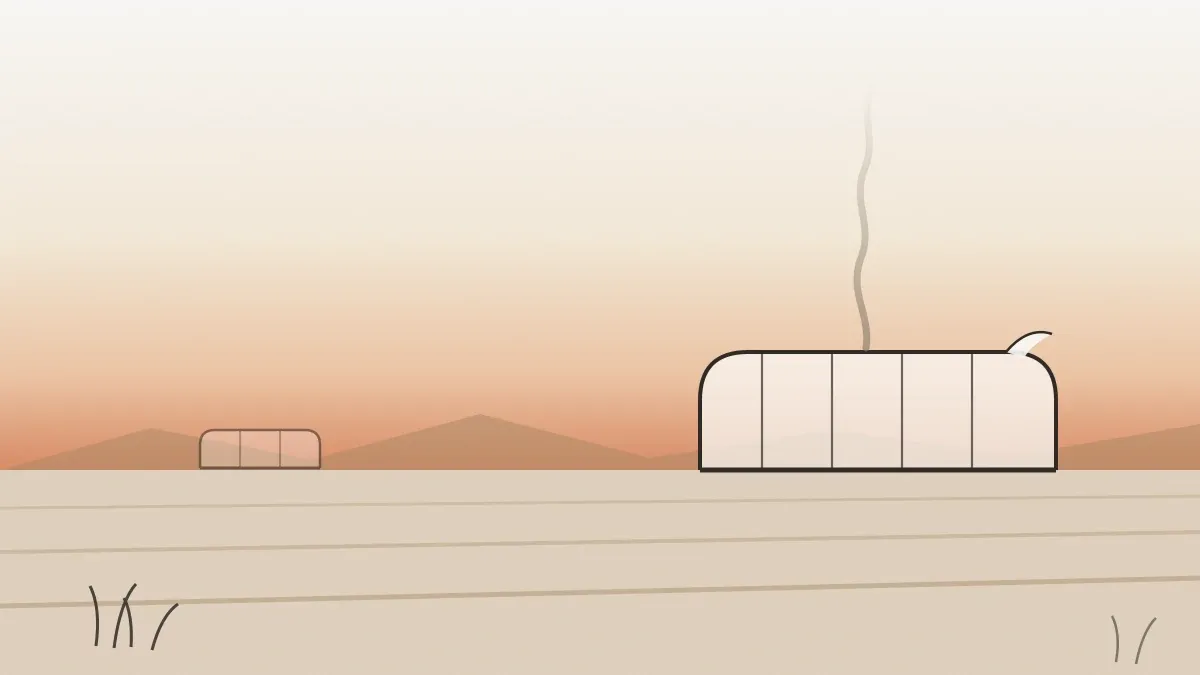
Then comes Ben (Steven Yeun), the man Hae-mi brings home after being stranded with him at Nairobi Airport: a Gangnam apartment, a Porsche, and a job he describes, with a small smile, as “playing.” Jong-su lands the film’s most precise line on him — Korea is full of Gatsbys, young and rich with no visible explanation. One hazy dusk, over marijuana, Ben confides his hobby: every two months, he burns down an abandoned plastic greenhouse. Nobody notices when such things disappear. The next one, he adds, has already been chosen — very soon, and very close to Jong-su’s house.
After that evening, Hae-mi vanishes.
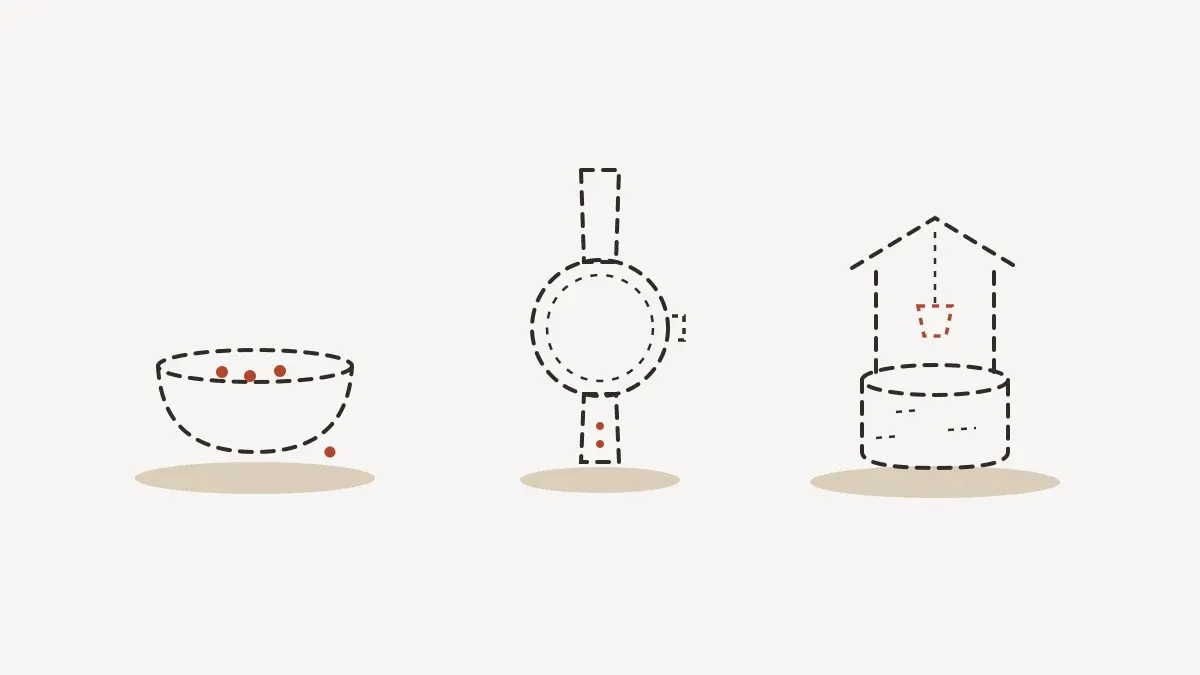
From here the film grows the full skeleton of a thriller: missing woman, suspicious rich man, obsessed investigator. And the genre hardware is all supplied. In Ben’s bathroom drawer, among an accumulation of women’s trinkets, Jong-su finds a pink watch of the same model Hae-mi wore. Ben has a new cat; Jong-su calls “Boil,” and it comes. Enough to convict? A watch of the same model is not the same watch. A cat that responds to a strange name may just be a cat. Every exhibit is sufficient for belief and insufficient for proof.
The well is the most complete demolition, because it dismantles the past itself. Hae-mi says that as a child she fell into a dry well near her house and Jong-su rescued her. He checks. Her family says there was never a well — and that she has always made things up. The neighbors say there was no well. The only person who says yes, there was a dry well is Jong-su’s mother, absent for years and newly returned to ask him for money: the least credible witness in the entire film. Whom do you believe? The film hands you the question and refuses to weight the scales.
None of this is coy craftsmanship for its own sake. In the film’s official Cannes press notes, Lee explains that what drew him to the Murakami source was the gap in the chain of events — the missing piece that keeps the truth permanently out of reach — because that is what the present world feels like: we sense something is wrong and cannot locate the problem. The mystery structure isn’t a narrative technique. It’s a worldview, translated directly into form.
The class coordinates of rage
If Burning were only an epistemology exercise — “nothing can be known” — it would not hurt the way it does. It hurts because every unknowable thing sits precisely on the same class fault line.
Space first. Jong-su’s world is Paju: plastic sheeting, a cowbell, court dates, the North’s loudspeakers. Ben’s world is Gangnam: the Porsche, the espresso machine, friends who treat boredom as a sensibility. Cinematographer Hong Kyung-pyo has said the film’s key light was simply sunlight — his job was to find the natural light appropriate to each scene. That modest sentence is secretly a class statement: the same sun that scorches Jong-su is, on Ben’s side of the river, just good lighting.

Now the two performances. The pub pantomime is the first. The second is the famous dusk sequence — shot over roughly a week to catch the few usable minutes of magic hour each day: three people smoking on the farmhouse yard, Miles Davis’s trumpet improvisation for Elevator to the Gallows on the stereo, and Hae-mi, shirt off, dancing toward the disappearing sun the dance she learned in Africa. She has already explained its name. Little hunger is the hunger of the stomach; great hunger is the hunger for meaning. This is the only moment in the film when someone is neither surviving nor playing but searching.
And the film immediately shows you the price of searching. More than once, Ben yawns precisely when other people are at their most sincere — meaning bores him at a physiological level. And Jong-su, the one person who loves Hae-mi, sends her off with the cruelest line he owns: only whores take their clothes off in front of men. It is the film’s deepest cut because of who delivers it. Jong-su is humiliated by the world all day long, and the one response he has learned is to humiliate the person standing one rung below him. Lee refuses to hand you a clean victim — the most complete victory of class violence is getting the crushed to administer it.
Ben’s confession only develops, like a photograph, inside this coordinate system. What he burns are abandoned greenhouses: structures that once had a purpose and now stand transparent, empty, in the way. Screenwriter Oh Jung-mi says in the same press notes that when she read the phrase “useless barns” in the source story, she immediately thought “useless people” — and felt both empathy and anger. Lee adds that the greenhouse is a purely cinematic image, beyond concept: it has a body, yet it is see-through and holds nothing. Does Jong-su understand the metaphor? The film’s answer is crueler than a yes: he begins to jog past every greenhouse near his home, morning after morning, waiting for a fire that never comes — because some part of him suspects that in Ben’s taxonomy, he and the greenhouses belong to the same category.
The case for calling it hollow
Now the strongest objection, laid out at full strength, because it deserves it — and because it comes in three distinct forms.
Scale, first. Murakami’s “Barn Burning” runs about twenty pages and is a story in which, famously, nothing happens: a man mentions burning barns, no barn burns, a woman drops out of view, the end. Ambiguity is a short story’s privilege. A twenty-page riddle can be elegant; a 148-minute riddle owes you a reason. What exactly did Lee add with the extra two hours — depth, or dilution?
Posture, second. “Nothing can be proven” is an unfalsifiable authorial position. Say the cat proves nothing, and the defense answers: that’s the point. Say the pacing drags: slowness is the theme. Say Hae-mi is thin: her thinness is how the world treats her. When every flaw can be recycled as intention, criticism loses its grip — this is the standard get-out-of-jail card of ambiguity aesthetics, and Burning’s admirers reach for it constantly.
Evidence, third. The charge is not abstract. In the third act, the same visual sentence — Jong-su’s rusted truck shadowing the Porsche from a distance — repeats past the point of information. The greenhouse-patrol jogging montage says everything it has to say by its second appearance; the repetitions after that feel like tolls paid to art-film solemnity. Inside the 148 minutes there is a stretch where atmosphere is simply photocopying itself.
Add the three together and you get the full indictment: if Burning’s ambiguity merely lets every audience take home what it brought — existentialism for the literary, class rage for the political, a serial killer for the genre crowd — then it is a superior emptiness, a mirror that flatters whoever looks in. That charge needs an actual answer before anyone is entitled to pick a side.
Picking a side: does the blankness have coordinates?
It has one, and it can be stated concretely. The test is whether the blank spaces point anywhere. Hollow ambiguity leads to “think whatever you like.” Precise ambiguity leads to “you can only think one thing — you just can’t prove it.”
Burning is the second kind, and the key is the graft Lee performs on two short stories that share a title. He lays it out himself in the press notes: in Faulkner’s “Barn Burning,” the barn is reality itself and the rage has an address — a tenant farmer burns the landowner’s property. In Murakami’s, the barn is a metaphor and the rage has nowhere to land. Lee’s operation is to make Jong-su live inside Murakami’s narrative while carrying Faulkner’s anger. Jong-su recognizes it too — that is what his line about Faulkner means: reading him feels like reading his own story. He has inherited his father’s lethal temper, but his enemy is not a landowner. It is an entire structure that has made him surplus. And a structure does not bleed, cannot be indicted, will never be identified in a lineup.
This is why “is Ben actually a killer?” needs no answer: the answer changes nothing. If Ben is a murderer, Jong-su’s life is what it is. If Ben is innocent, Jong-su’s life is still what it is. Lee has said of this generation that they cannot find a target for their rage and end up concluding that the problem is themselves. The anger has no outlet, not because the culprit is well hidden, but because there is no object in the world answering to the name “culprit” — only greenhouses disappearing one by one, with no one ever held to account. Translate that condition into narrative form and you get exactly this: a thriller in which the evidence is always one step short. Form equals theme. That is not mystification; it is the most precise filming I know of the fact that structural violence has no perpetrator.
The ending belongs in this frame too. Before the snow-field scene, the film gives us a quiet shot: Jong-su at Hae-mi’s desk, typing — the man who spent two hours saying he would write a novel has finally begun. Only then comes the finale: Ben summoned, the knife, the gasoline, the Porsche in flames, Jong-su stripping off every piece of clothing to feed the fire and driving away naked, shaking, in his truck. Lee, asked directly, refuses to lock the scene down: he will not say Hae-mi never existed, “though you may interpret it as such” — and by the same logic the ending can be reality, or a page of the novel Jong-su has just started writing. This site leans toward the novel — not because it is the safer reading, but because it is the sadder one. If even revenge can only happen inside fiction, that is the terminal form of unprovable anger: it is not permitted to erupt until it has first turned itself into literature.
The real flaw: the film’s imagination for Hae-mi
Side chosen, accounts due. What costs Burning its 1.2 points is not the ambiguity and not the runtime. It is Hae-mi.
Consider what this character carries. She is the only person who names the great hunger, and the only one actually searching for meaning — saving for Africa, learning pantomime, learning the dance. She supplies the film’s only two moments of pure freedom: the pub story that slides, mid-sentence, into tears, and the dance at dusk. Jeon Jong-seo, a newcomer Lee found through an audition, builds a living person inside the script’s narrow openings.
Now consider what the film does with her. Her past — the well, the plastic surgery she mentions, the card debt — is uniformly flagged as dubious. Her interior life reaches us only through two monologues of her own, and both (the pantomime philosophy, the well memory) are engineered by the film to be possible fabrications. After she disappears, the narrative’s entire curiosity shifts to how two men will interpret her disappearance. She is not a missing person; she is a riddle bequeathed to men. Criticism has a name for the old device of removing a woman to fuel a male protagonist’s transformation — “fridging” — and Burning reenacts it in the most prestigious form available: her structural function is to vanish.
The film can plead intent: her unknowability is the theme; she is the concrete image of how “useless people” get erased without a sound. The plea is half valid. But intent does not fully discharge the result. A film that spends 148 minutes deep-mapping one man’s interior grants its only female lead two monologues pre-stamped “unverifiable.” Her admission fee for becoming the theme is never getting to be a finished character. The same material, with Hae-mi’s point of view allowed to become — even briefly — a pole of the narrative rather than its object, would be a more complete film, and the dance sequence proves the capability existed. The film declines to use it. That is the distance between this and a perfect score.
What 8.8 means
The credit side first. Burning achieves something close to unique: it converts “not being able to know” from a philosophical proposition into a physical experience. You leave the film not puzzled but angry — with no one to be angry at — which means it has successfully installed its protagonist’s condition in your body. That takes the whole system working in concert: Hong Kyung-pyo’s natural light giving poverty an actual texture, the two lead performances tuned in opposite directions (Steven Yeun makes friendliness the most frightening thing in the film), and Lee’s patience in dismantling his own thriller. It is also a film that changes species on second viewing: the first time you watch a mystery; the second time the mystery is gone and every shot has become a class annotation.
The debit side has two lines of very different weight: Hae-mi’s narrative rights (the large one, itemized above) and the third act’s self-photocopying stretch (the small one, but real).
So here is what 8.8 means in practice: essential viewing, worth two deliberate passes — but not on a tired night. Its 148 minutes demand full attention and repay you not with catharsis but with a low fever that stays in the body for days. If you responded to In the Mood for Love, which this site has covered — another film that turns withholding into method — this is the colder branch of the same family: Wong Kar-wai withholds a feeling, Lee Chang-dong withholds the truth itself. And he never gives it back.
Sources
- Burning — Official Cannes Press Kit (Finecut) (the full Lee Chang-dong × Oh Jung-mi conversation: the gap in the chain of events, “Project Rage,” Faulkner’s barn vs. Murakami’s barn, “useless barns” → “useless people,” the greenhouse as an image beyond concept, pantomime/cat/well as one family of questions, the Great Hunger and the Bushman quotation; also 148 min / 2.35:1 specs, Hong Kyung-pyo on sunlight as key light, Shin Jeom-hui’s production design, Jeon Jong-seo’s audition casting, Lee’s first film in eight years)
- ‘Burning’ tops Screen’s final 2018 Cannes jury grid with record score — Screen Daily (May 2018) (3.8/4, highest in the grid’s history; eight of ten critics at full marks; Toni Erdmann’s 3.7 surpassed; Shoplifters second at 3.2)
- ‘Burning’ director Lee Chang-dong on his “ambiguous” Cannes Competition title — Screen Daily (May 2018) (“Something gets burned in a fire, but was it really burned?”; the repressed rage and helplessness of young Koreans in 2017–2018; shooting in Paju near the DMZ; the sunset scene taking about a week)
- 91st Oscars Shortlists in Nine Award Categories Announced — Oscars.org (December 2018) (87 submissions, nine-film shortlist including South Korea’s Burning — a first for Korean cinema)
- Interview: Lee Chang-dong at MoMA — ScreenAnarchy (February 2019) (the NHK Murakami-adaptation project and Oh Jung-mi’s proposal; anger as “a keyword into understanding the world we live in today”; young people internalizing failure as “I, as an individual, am a problem”; “we really don’t know if Ben is really a serial killer, or if he’s just a really generous guy”)
- Mysterious Elements: Lee Chang-dong Discusses “Burning” — MUBI Notebook (2019) (“I wouldn’t go so far as to say that she never existed from the beginning, though you may interpret it as such”; what Jong-su’s naked body has become; writers looking for a story in the world; the film as a mystery asking “Who is Ben?”)
- Cannes: ‘Burning’ Wins Fipresci Top Prize — Variety (May 2018) (the FIPRESCI prize; the Palme d’Or going to Shoplifters)
- Festival de Cannes — Official 2018 Awards Retrospective (no competition-jury award for Burning; the film’s single entry on the official winners list is production designer Shin Jeom-hui’s Vulcain Prize for an artist technician, awarded by the C.S.T.; Shoplifters as Palme d’Or)
- Burning (2018 film) — Wikipedia (plot cross-checks: a greenhouse burned every two months, the next one “very soon and close”; the Nairobi Airport stranding; the Paju cattle farm and the father’s trial; the knife and the fire at the end; Wikidata Q27964354 and IMDb tt7282468 cross-verified)
All four illustrations in this article are original artwork created for this site. No stills, poster compositions, or actor likenesses were used.